
Published: June 19, 2026 | Reading time: 11 minutes | By Adrian Cole
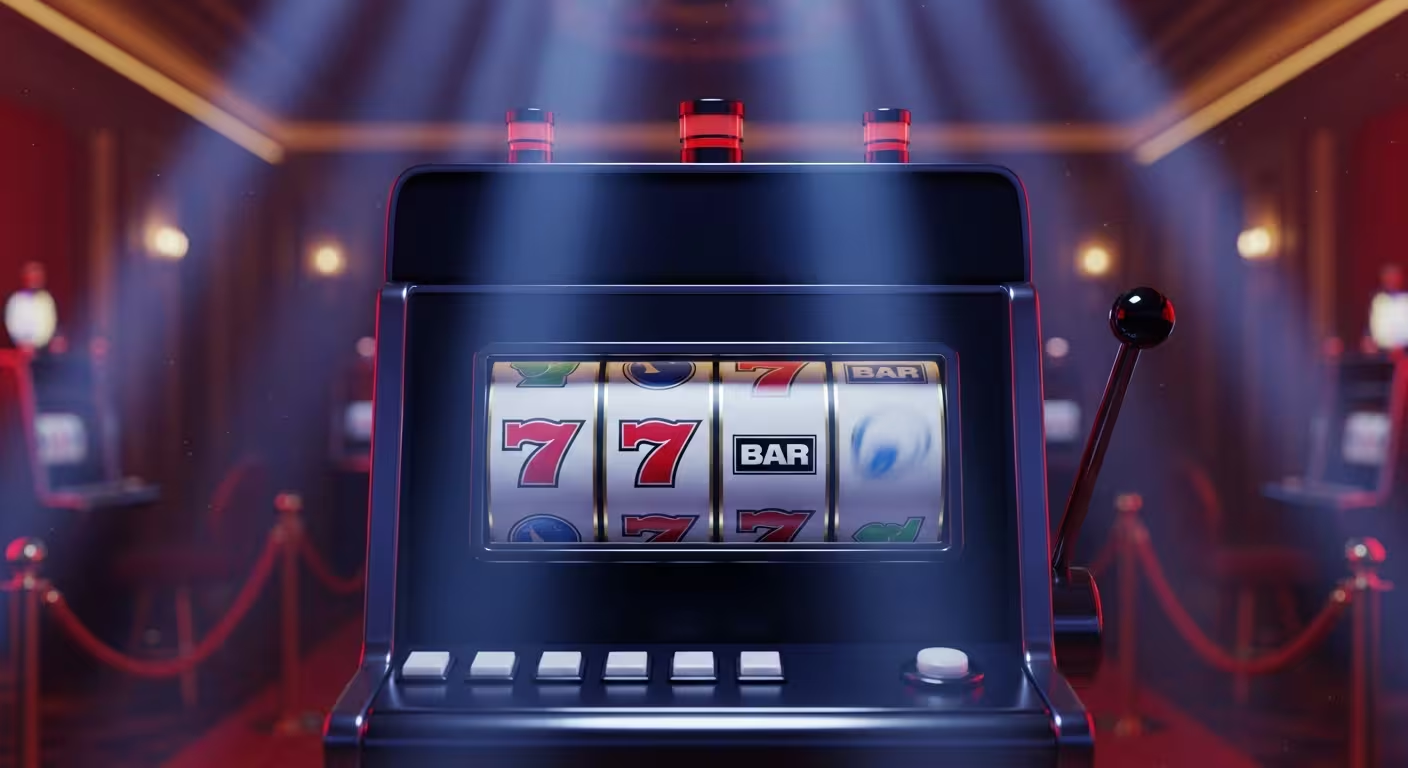
There’s a moment in every serious slot player’s life that hits harder than most actual wins. The reels slow down… three symbols line up perfectly… and then the fourth one stops just one position away. Your stomach drops. Your heart races. For a split second, you genuinely believed you had won. Welcome to the near-miss effect — one of the most powerful and emotionally complex experiences in online slots. At SlotVadi, we’ve seen thousands of players go through this exact feeling, and today we’re going to explore exactly why “so close” can feel more addictive than actually winning.
This isn’t just bad luck. It’s a beautifully cruel psychological mechanism that has been studied for decades. When you experience a near miss, your brain doesn’t register it as a loss. Instead, it treats it almost like a win. The same reward pathways light up. Dopamine floods your system. And then reality hits — and you’re left with a strange, powerful cocktail of excitement and disappointment that makes you want to spin again immediately.
The Science Behind the Heartbreak
That split-second belief that the reels are speaking directly to you is closely tied to the stories players tell themselves in every spin, because the mind turns randomness into a personal narrative almost instantly.
Our team has spent years observing player behavior across hundreds of games. What we’ve learned is both fascinating and a little sobering. Near misses don’t just happen randomly — they’re emotionally amplified by the way modern slots are designed. The visual slowing of reels, the dramatic pauses, the sound design that builds tension… all of it is carefully crafted to make that almost-win feel monumental.
How Near Misses Affect Your Brain and Behavior
The effect becomes even sharper when sound design joins the visual pause, because a rising tone can make an almost-win feel almost physical.
- Dopamine Response — your brain releases reward chemicals similar to an actual win
- Motivational Boost — near misses increase the desire to continue playing more than clear losses
- Illusion of Control — you start believing you were “close” and that the next spin will fix it
- Emotional Memory — these moments stay with you longer than regular spins
- Chasing Behavior — they’re one of the strongest triggers for longer playing sessions
Near Miss vs Actual Win: Emotional Impact Comparison
Because a near miss can feel like evidence that a win is approaching, it often feeds the same false logic behind slot hacks, timing myths, and “due” machine beliefs.
| Experience | Emotional Response | Brain Activity | Effect on Future Play |
|---|---|---|---|
| Clear Loss | Disappointment, quick recovery | Low reward activation | Lower motivation to continue |
| Near Miss | High excitement + disappointment | Strong reward pathway activation | Significantly higher desire to spin again |
| Actual Win | Joy, satisfaction | High reward activation | Positive but often less urgent than near miss |
The near miss doesn’t just tease you — it whispers that you were almost good enough, almost lucky enough, almost there. And that whisper is incredibly hard to ignore.
Let me paint a picture that every experienced player will recognize. It’s 2:17 a.m. You’ve been spinning for a while. You’re slightly down, but not worried. Then it happens. The first three reels stop on the same high-paying symbol. The fourth reel is spinning slowly… you can almost see it landing in the right place. The music has already climbed a semitone — one of the quiet tricks catalogued in our guide to slot soundscapes and auditory illusions. Your finger hovers over the spin button even before the reel stops. When it lands one position off, you feel a strange mix of devastation and strange hope. You don’t even think — you just hit spin again. That exact moment is the near-miss effect in its purest, most human form. It doesn’t feel like gambling. It feels personal.
Common Questions About the Near-Miss Effect
Why does almost winning feel so intense?
Near misses activate the same brain
reward centers as actual wins, creating a powerful emotional high mixed with disappointment that
keeps players engaged.
Are near misses deliberately programmed into slots?
Modern regulated slots
use certified RNGs. Near misses occur naturally due to probability, but game designers
understand their emotional impact and sometimes highlight them visually.
How can I protect myself from the near-miss effect?
Recognize that a near
miss is still a loss. Set strict limits, take breaks, and remember that every spin is
independent with the same odds.
For a deeper scientific understanding of this phenomenon, we recommend this open-access review in the Journal of Gambling Studies: The Near-Miss Effect in Slot Machines: A Review and Experimental Analysis Over Half a Century Later.
How to Spin With Awareness
It also helps to name the sharpest version of the effect: two scatters landing where a third would have opened free spins. That is the near miss at its most concentrated, and it borrows every bit of its power from the emotional pull of the bonus round it failed to deliver.
The goal isn’t to stop enjoying slots. The goal is to enjoy them with open eyes. When you recognize the near-miss effect for what it is — a natural psychological response rather than a sign that you’re “due” for a win — you regain control. You can still chase the thrill. You can still enjoy the rush. But you do it from a place of awareness instead of emotional reaction.
Ready to Play With Clear Eyes?
The near-miss effect is powerful, but it doesn’t have to control you. When you understand what’s happening in your brain, you can enjoy the excitement while making smarter decisions. Join SlotVadi today and experience slots with full awareness, generous bonuses, and the peace of mind that comes from playing responsibly.
Thank you for reading this deep dive into one of gambling’s most fascinating psychological effects. Head back to SlotVadi home whenever you’re ready for more insights and great games.

Adrian Cole
Slot mechanics analyst and casino content editor focused on player psychology, RTP clarity, and responsible slot strategy.
More about the author
Reader comments
The 2:17 a.m. paragraph is uncomfortably accurate. I have hit spin again after a near miss more times than I want to admit, and reading it written down like that actually made me stop and think.
What helped me was the line about a near miss still being a loss. Obvious when you say it out loud, but somehow the brain refuses to file it that way in the moment.